
Posted: May 4, 2026 | Forestry Education
If you’ve followed the timber market over the past few years, you’ve probably noticed something shifting. Not all timber is being valued the same way anymore.
In fact, the gap between high-quality sawtimber and lower-grade pulpwood has widened significantly, and for North Carolina landowners, that shift is changing how land should be managed moving forward.
This isn’t just a market trend. It’s a signal.
Before getting into the market side, it helps to understand what we’re actually talking about.
Pulpwood is typically smaller, lower-quality trees used for products like paper, packaging, and engineered wood products. These trees are often harvested earlier in a stand’s life or come from lower-performing areas.
Sawtimber, on the other hand, is larger, higher-quality timber suitable for lumber and construction. These trees have straighter stems, fewer defects, and greater diameter, making them far more valuable per ton.
For years, both played important roles in a balanced timber market. But that balance is changing.
Across North Carolina and much of the Southeast, several factors are pushing the market in favor of sawtimber.
Lumber continues to be a key component in residential and commercial construction. Even with fluctuations in housing starts, demand for quality lumber remains relatively strong compared to lower-end products.
That demand directly supports higher prices for sawtimber.
Pulpwood markets have been under pressure due to mill closures, changes in paper demand, and increased supply. When there’s more low-grade wood available than the market needs, prices naturally fall.
That’s exactly what we’ve been seeing.
Fewer mills processing pulpwood means fewer outlets for that material. In some areas, landowners are finding it harder to move pulpwood at all, or at least at prices that make a harvest worthwhile.
Meanwhile, mills that process sawtimber are still actively competing for high-quality logs.
This shift isn’t just interesting, it should influence how you think about your land.
The days of managing purely for volume are fading. Today, a stand of well-managed, high-quality trees can outperform a larger stand of lower-grade timber in terms of overall value.
It’s not just about how much timber you have. It’s about what kind.
Harvesting too early often means selling into the pulpwood market. Waiting longer, when appropriate, can allow trees to grow into sawtimber size classes where value increases significantly.
Of course, every property is different, and waiting isn’t always the right move. That’s where proper planning comes in.
Some properties are naturally better suited for producing high-quality sawtimber based on soil, species, and past management. Others may lean more toward pulpwood production.
Understanding what your land is capable of is key to making the right decisions.
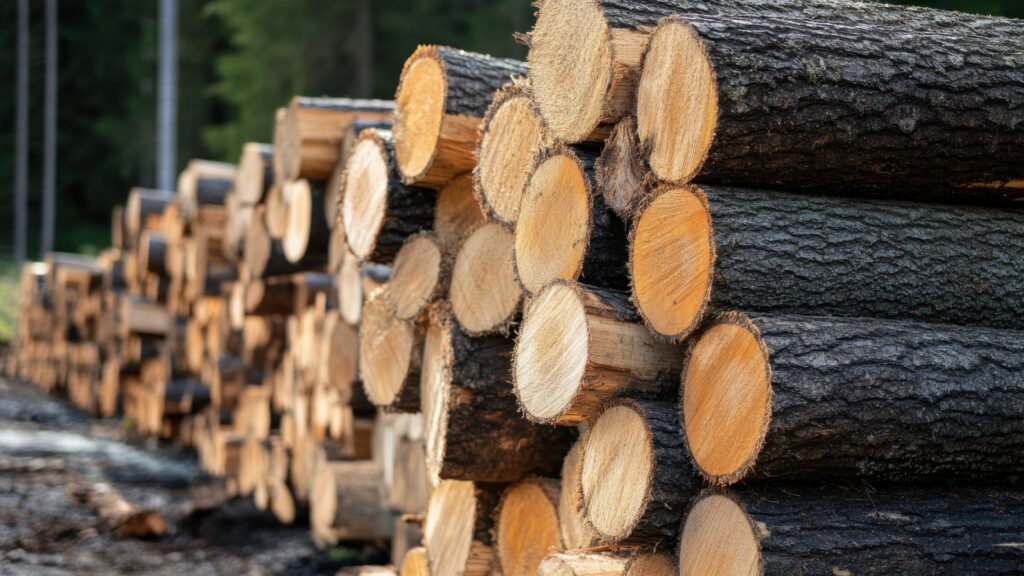
If the market is rewarding quality, management strategies need to reflect that.
That often includes:
These decisions aren’t made overnight. They’re part of a long-term approach that builds value over time.
While statewide trends are helpful, timber markets are still very local. Prices, demand, and mill access can vary significantly depending on where your property is located.
What’s true in one part of North Carolina may not apply the same way in another.
That’s why working with a consulting forester who understands your specific market can make a big difference in how your timber is positioned and sold.
The market is sending a clear message right now: quality timber is in demand, and it’s being rewarded.
For landowners, that means taking a closer look at how your land is being managed and whether your long-term strategy aligns with where the market is heading.
Forestry has always been a long game. The difference today is that the payoff is increasingly tied to how well you manage for quality along the way.