How Easy It Is to Measure a Tree’s Height? The Biltmore Stick Hack
Posted: July 19, 2025 | Forestry Education
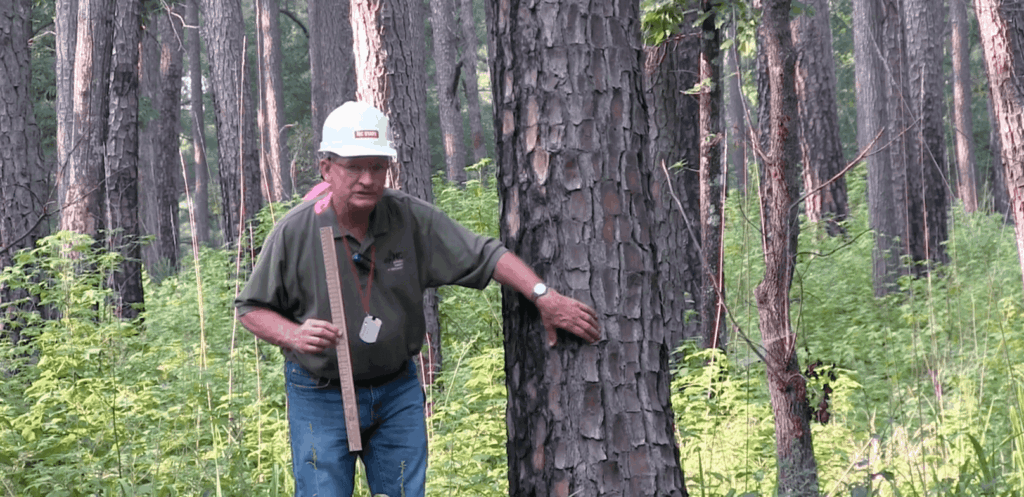
Ever wondered how foresters estimate tree height without lugging around heavy survey equipment? In this video from Woodland Stewardship on YouTube, you’ll learn how the classic Biltmore stick is still a go-to tool for sizing up the number of 16-foot logs in a standing tree. It’s a straightforward, time-tested method that forestry professionals use regularly in the field—even today. Check it out to see how it’s done!
You Won’t Believe How Easy It Is to Measure a Tree’s Height, The 25-Inch Biltmore Stick Hack
Why the Biltmore Stick Still Matters
Quick volume estimates: Many tree-volume tables assume 16-foot logs, and the Biltmore stick’s built-in scale helps you read off whole and half logs in seconds.
Repeatable results: By sticking to a fixed distance and a consistent holding point, your measurements become reliable—whether you’re checking your own work or comparing notes with a consulting forester.
Conservative by design: When estimating merchantable volume, it’s better to err on the side of caution. The stick’s scale encourages a lower log count if you’re between marks.
What You’ll Need
Biltmore stick (with 16-foot log scale)
Logger’s tape (marked in feet; 66 feet = 1 chain)
Hammer and nail (to anchor your tape at breast height)
A bit of practice holding your stick exactly 25 inches from your eye (hint: that’s about arm’s length)
Getting Set Up in the Woods
Anchor your tape about 4½ feet up the stem (eye level) with a nail. Aim for the center of the trunk—not the edge. Even a few inches off-center can throw off your distance.
Step back exactly 66 feet (one chain) from the tree. Too close and you’ll overestimate; too far and you’ll underestimate. The video includes a quick tip to lock in that chain length.
Practice your grip: The Biltmore stick is designed so that its full length equals 25 inches—the perfect eye-to-stick distance. Hold it vertical at arm’s length for consistent results.
Reading Your Tree Like a Book
Bottom of the stick: Line the zero mark just above the visible stump (typically about 6 inches high).
Top of the logs: Without moving your head or the stick, find the point on the trunk that represents the inside-bark diameter cutoff for saw-timber—usually around 8 inches. That point on your stick tells you how many 16-foot logs the tree contains.
Half-log precision: If the top hits between two log marks, go with the half-log measurement for a conservative tally.
A Few Pro Tips
Keep it vertical: A tilted stick skews your reading. Find a comfortable “plumb” hold before you zero in on the top log mark.
Mind your head: Don’t lean or twist—keep your eye fixed on the stick and the treetop in one steady glance.
Practice makes perfect: Try the method on trees of known height (using a clinometer or measuring pole) to hone your accuracy.
There you have it—a field-tested, no-frills way to estimate tree height using a Biltmore stick. Whether you’re cruising a Christmas tree farm, evaluating timberland, or just curious about the pine in your backyard, this trick is a must-have in your forestry toolkit.
Want to dive deeper into woodland measurements, forest inventories, or land consulting? Give us a shout at Carolina Forestry & Realty—we’ve been on the ground in North Carolina and Virginia for decades, helping landowners get accurate, conservative estimates that hold up in real-world markets.
Stay informed on forest management tips, industry trends, and expert insights by signing up for the Carolina Forestry newsletter. As a subscriber, you’ll gain access to valuable resources and advice from our professional foresters.