
Posted: January 16, 2026 | Industry News
The North Carolina Forest Service is sounding the alarm after reporting a sharp increase in wildfire activity across the state. In December 2025 alone, North Carolina experienced 724 wildfires on state and private lands, a 32% increase compared to December 2024. That jump underscores what many firefighters and foresters are already seeing on the ground: wildfire risk in North Carolina is elevated and likely to remain that way in the months ahead.
That risk became especially clear in early January, when crews responded to a large wildfire in Rutherford County. The fire ignited on New Year’s Day and was 90% contained by January 5, thanks to rapid response and favorable conditions. While containment was successful, the incident highlights how quickly fires can start and spread during dry winter conditions.
According to the Forest Service’s most recent seasonal wildfire outlook, fire activity is expected to remain above normal through the winter and into the spring wildfire season. While many people associate wildfires with summer and drought, North Carolina’s peak wildfire season often begins before trees leaf out, when dry vegetation, wind, and low humidity create ideal conditions for fast-moving fires.
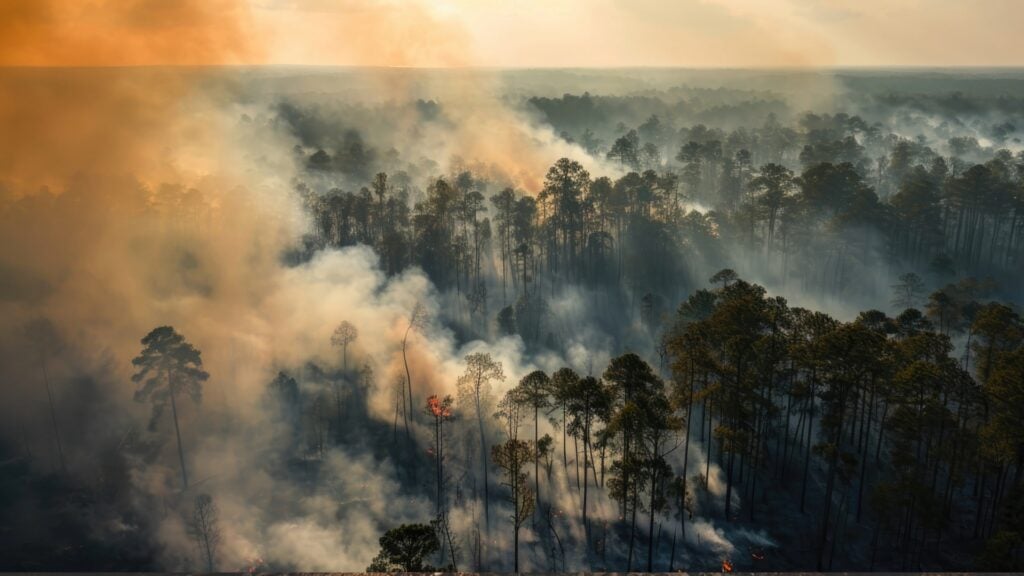
One major factor driving today’s elevated risk is fuel on the ground, particularly in Western North Carolina. In 2024, Hurricane Helene left behind an estimated 800,000 acres of downed timber, dramatically increasing the amount of burnable material across the landscape. Dead and damaged trees dry quickly, providing continuous fuel that can allow fires to grow larger and burn hotter than normal.
It’s also important to remember that wildfires in North Carolina are overwhelmingly human-caused. The state sees more than 4,500 wildfires every year, with nearly 99% linked to activities such as backyard debris burning, escaped campfires, and equipment use. Even a small, unattended burn pile can become a wildfire under the right conditions.
With these risks in mind, the Forest Service is urging residents and landowners to take wildfire prevention seriously. Follow recommended best practices for outdoor burning, check local burn conditions before lighting any fire, and never leave a burn unattended. Just as importantly, homeowners can take steps to harden their homes and create defensible space within the home ignition zone. Clearing flammable debris, trimming vegetation near structures, and improving access for firefighters can often be done in just a few days and can make a meaningful difference if a wildfire threatens your property.
As wildfire risk continues to rise across North Carolina, preparedness isn’t just a recommendation — it’s a responsibility we all share. Reducing fuel, burning safely, and planning ahead are key steps in protecting our forests, our homes, and our communities.