
Posted: August 1, 2025 | Local News & Updates
If you’re in the Fraser fir business—or just love those fragrant Christmas trees—you’ve probably been on high alert for the spotted lanternfly (SLF) ever since it showed up in Forsyth and Guilford back in 2022. This summer, the NCDA&CS confirmed what many of us feared: a breeding population of SLF is now well established in Caldwell County, making it the second “new” county this year (Rockingham was first).
Caldwell County sits cheek-by-jowl with some of North Carolina’s top Fraser fir producers. While Pennsylvania’s Christmas tree growers have weathered a decade of SLF pressure without major damage to mature Fraser firs, these little jumpers are sneaky hitchhikers. They’ll lay egg masses on trucks, machinery—even the trunks of your trees—potentially tagging along on any load headed out of state.
Right now SLF isn’t a federally regulated pest, but if you farm Christmas trees in a county with an established infestation, you’re required to:
Regulations can—and often do—change on short notice. The best way to stay ahead of the curve is to keep SLF from ever getting comfortable on your farm.
SLF loves its host plant, the invasive Tree of Heaven (Ailanthus altissima). You might have noticed this fast-growing species popping up around old fence-rows, field edges, or along stream banks. Simply cutting it down won’t stop it—it’ll just sprout right back. Instead, the NCDA&CS recommends a targeted “hack-and-squirt” herbicide application to the stump.
Here’s a quick game plan:
If you’re not sure whether you’ve got Tree of Heaven—or you’re wondering if that sapling could be black walnut or staghorn sumac—reach out to your county’s Extension Office or give us a shout. We’re always happy to help landowners nail down those ID questions.
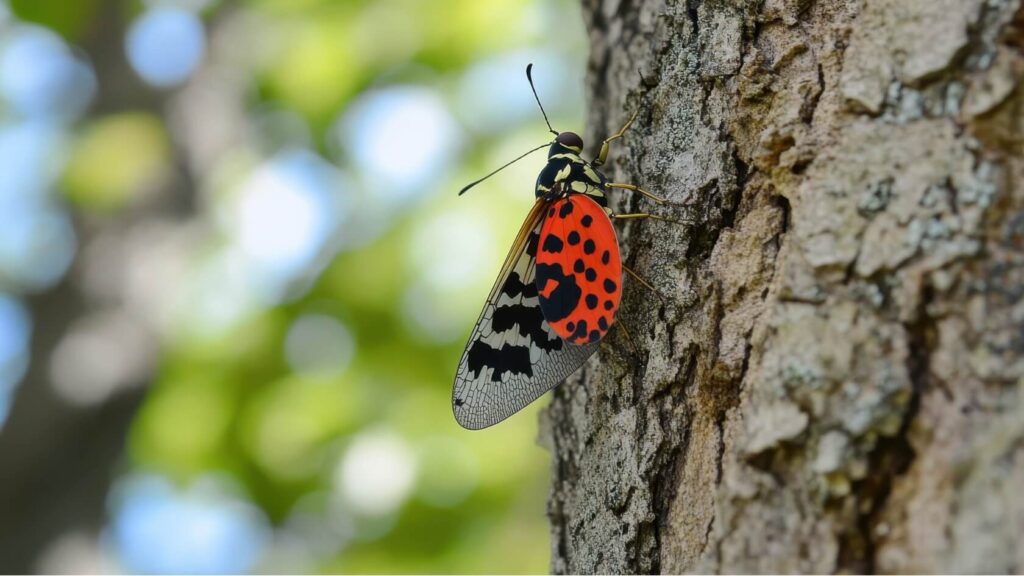
Spotted lanternfly populations ramp up in late summer and early fall. You’ll start seeing adults in August, but mating swarms peak in September—right when mountain views are at their most stunning. Not exactly the postcard moment you had in mind if your trees are buzzing with thousands of insects.
SLF also produces sticky “honeydew” that drips onto needles and the forest floor, encouraging sooty mold and drawing ants. That’s a nuisance for campsites, picnic areas, and, yes, your Christmas tree fields.
Meanwhile, NCDA&CS survey teams will continue year-round monitoring in Caldwell County, focusing treatments on high-risk areas—commercial lots, lumber yards, and farm equipment staging areas.