
Posted: August 5, 2026 | Land Management
Quick answer: Sawtimber and veneer trees need to come out within 4 to 6 weeks of storm damage before blue-stain fungus sets in, while pulpwood can wait 8 to 12 months. Don’t salvage an entire tract if less than 20% of it is damaged, since trees with intact root systems often recover on their own. Call a professional forester before you cut anything.
Sawtimber and veneer-quality trees should be removed within four to six weeks of storm damage. After that window, blue-stain fungus sets in and drags lumber quality down fast. Pulpwood has more breathing room and stays usable for eight to twelve months. Let that timeline drive your priorities: get your highest-value trees assessed and moving first, and know that lower-grade wood can wait if you need it to.
Not always. If less than 20 percent of a stand shows damage, trees with only minor bending or leaning, especially those with intact root systems, will often recover on their own. Clear-cutting an entire tract when damage is scattered in small pockets can cost you healthy, still-growing timber you didn’t need to lose. A professional forester can tell you the difference between damage that needs immediate attention and damage that just needs time. If you’re unsure what your standing timber is actually worth before or after a storm, a timber cruise gives you a real number to work from.
Slow down before bringing equipment in near water. Heavy machinery can do more harm to soil and stream banks than the storm itself did, and the ground needs to be dry enough to support that equipment without rutting or compacting it. Sometimes the better move is to leave downed wood in place, since it can improve habitat for amphibians and small mammals as it breaks down naturally.
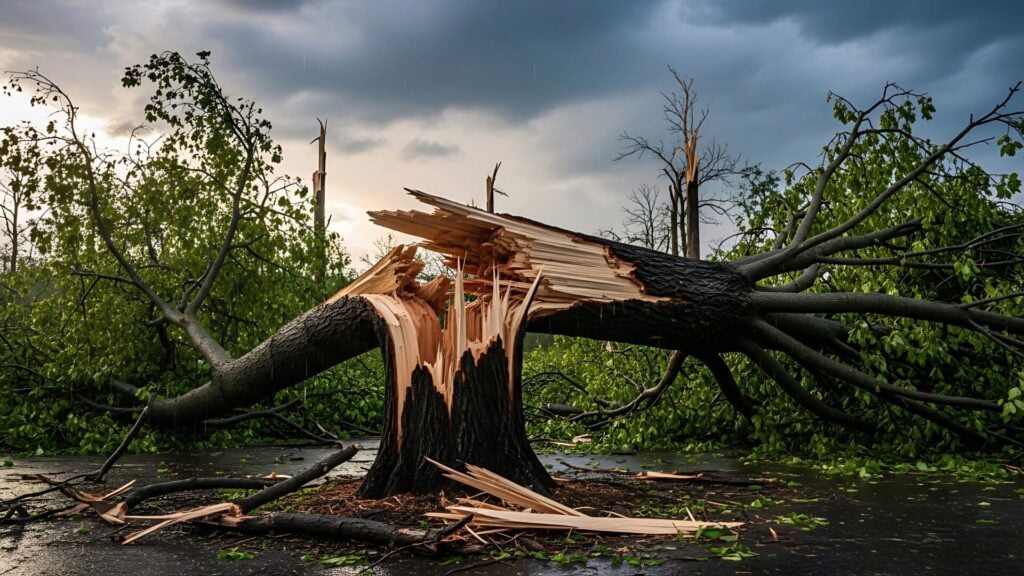
Before any salvage work begins, document the damage. Photograph the site, keep a copy of local news coverage of the storm, and note the date you first assessed the property. This record matters for insurance claims and for any future conversation about the timber value you lost to the storm.
Contact a professional forester or your county ranger with the NC Forest Service before you make any harvest decisions. They can assess the damage, help you prioritize what needs to come out first, and flag hazards like lodged trees, broken limbs, or washed-out access roads that make salvage work dangerous without the right plan. Once you’re ready to move timber, our guide on what to expect during a timber sale walks through the process from appraisal to cleanup.
Sawtimber and veneer trees start losing value within 4 to 6 weeks as blue-stain fungus sets in. Pulpwood holds its value longer, typically up to 8 to 12 months, depending on species and how the wood is stored.
Salvage work near waterways doesn’t always require a permit, but it must follow North Carolina’s Forest Practices Guidelines for water quality, including keeping heavy equipment out of the stream channel and avoiding soil disturbance near the bank.
Standard homeowner’s or landowner’s policies rarely cover timber value directly. Coverage depends on your specific policy, so document the damage thoroughly and check with your insurer and a local forester about what, if anything, applies to your situation.
Usually not. If less than 20 percent of your stand is damaged, it’s often better to leave the healthy trees standing and salvage only what’s genuinely compromised. A forester can help you assess which areas need a full harvest versus a wait-and-see approach.
If your land took a hit this season, don’t guess at next steps on your own. Reach out to Carolina Forestry & Realty and we’ll help you assess what’s salvageable, what should be left to recover, and what your timber is actually worth right now.