
Posted: October 16, 2026 | Land Management
Quick Answer: North Carolina’s fall wildfire season typically runs from October through early December. Falling leaves, dry vegetation, and changing weather conditions increase the risk of fast-moving fires. Human activity causes more than 99% of wildfires in the state. Landowners can reduce their risk by maintaining firebreaks, clearing access roads, managing debris, and reducing vegetation near buildings. Planning prescribed burns for suitable weather conditions can also help protect timberland.
Most landowners associate wildfire season with spring. However, North Carolina experiences a second wildfire season every fall. In a September 23 announcement, the N.C. Forest Service warned that fire activity typically increases from October through early December.
Conditions heading into fall 2026 have raised additional concerns. A suspected trash fire in Robeson County burned more than 150 acres in late September and seriously injured two firefighters. Although recent rainfall improved some drought conditions, soil moisture remains low in parts of the state. Meanwhile, debris left behind by Hurricane Helene continues to create potential fire hazards in western North Carolina.
Fortunately, landowners can take several practical steps to protect their timber investments before wildfire activity increases.
North Carolina experiences two primary wildfire seasons. The spring season generally runs from March through May and typically sees more wildfire activity. We previously covered those concerns in our article about North Carolina’s spring wildfire season and drought conditions.
The second season begins in October and usually continues through early December.
Several environmental factors contribute to increased fire danger during fall. Leaves accumulate across the forest floor while grasses and understory vegetation become dry. Additionally, lower humidity and stronger winds can help small fires spread quickly.
These conditions make even routine outdoor activities potentially dangerous. A debris fire that might remain contained during a humid summer afternoon could spread rapidly on a dry, windy fall day.
According to the N.C. Forest Service’s early September situation report, North Carolina had already experienced more than 5,800 wildfires in 2026. Those fires affected approximately 16,500 acres statewide.
Human activity causes the overwhelming majority of wildfires in North Carolina. According to the N.C. Forest Service, people are responsible for more than 99% of wildfires statewide.
Common causes include unattended debris burns, equipment sparks, discarded cigarettes, and intentionally set fires.
For timberland owners, these statistics highlight two important concerns. First, everyday activities on your own property can create unnecessary fire hazards. Second, fires that begin on neighboring properties can spread into surrounding timber stands.
Taking preventative measures helps reduce both risks. Proper land management also gives firefighters better opportunities to contain a wildfire before significant timber damage occurs.
Protecting timberland requires a combination of preventative maintenance, vegetation management, and emergency planning. Fortunately, many of these improvements also support long-term forest health.
Firebreaks are cleared strips of land designed to slow the movement of ground fires. They typically contain bare soil or very limited vegetation.
Landowners often establish firebreaks along property boundaries, around young timber plantations, and between managed forest stands. These cleared areas can also provide firefighters with safer locations to work.
Before fall wildfire season begins, inspect existing firebreaks for accumulated leaves, branches, and unwanted vegetation. Remove anything that could allow flames to cross the cleared area.
Access roads deserve equal attention. Emergency crews need reliable routes into forested properties when responding to a wildfire.
Remove fallen trees, inspect gates, and make sure important access points remain accessible. Sharing property access information with your local forest ranger can also improve emergency response.
Dry vegetation, fallen branches, and accumulated pine needles provide fuel for wildfires. Areas near roads and neighboring properties can be especially vulnerable when fires spread from outside sources.
Pay particular attention to roadside vegetation, field borders, and wooded areas surrounding buildings.
Cabins, barns, equipment sheds, and other structures benefit from defensible space. Removing combustible debris within approximately 30 feet of a building can help reduce wildfire exposure.
Keep nearby vegetation maintained and remove dead limbs whenever practical. These preventative improvements can make a meaningful difference during a wildfire.
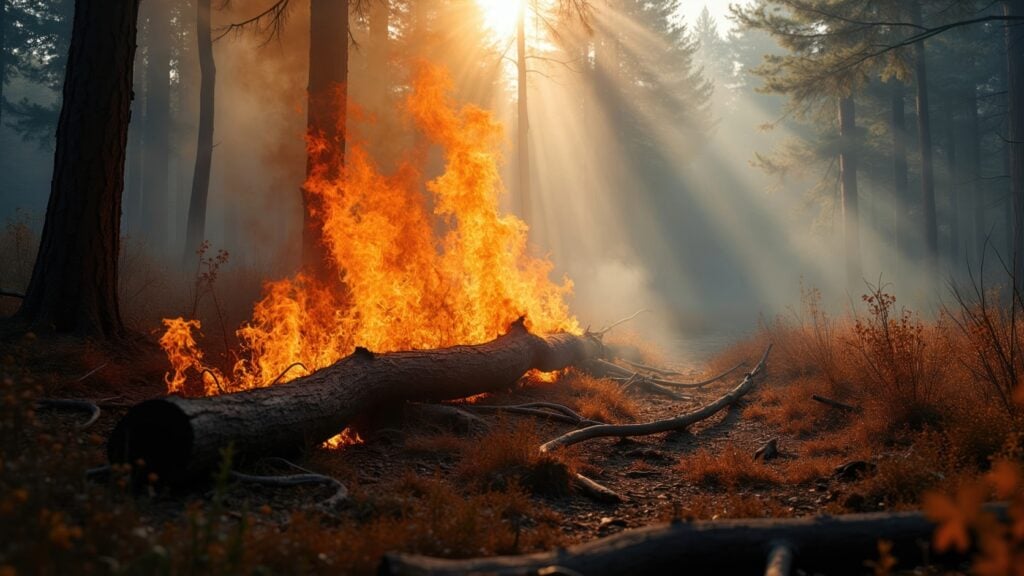
Storm-damaged trees and leftover logging materials can increase wildfire intensity. Over time, fallen branches and exposed wood dry out, creating additional combustible material across the forest floor.
Landowners should evaluate damaged stands and determine whether valuable timber can be recovered. Removing hazardous debris from strategic areas can also help reduce potential fire damage.
Our guide to salvaging storm-damaged timber in North Carolina explains why timing matters when recovering damaged trees.
This concern remains particularly important in western North Carolina following Hurricane Helene. Significant amounts of storm debris continue to affect forests throughout the region.
Recovery efforts include $7 million in state funding intended to reduce wildfire risks associated with Helene debris. Additionally, a nearly $65 million, 10-year Good Neighbor Agreement supports recovery work involving the USDA Forest Service and N.C. Forest Service.
However, these programs primarily address public lands and surrounding communities. Private timberland owners should continue developing property-specific debris management plans.
Forest management plays an important role in reducing long-term wildfire risk.
Overcrowded timber stands often contain dense understory vegetation and accumulated organic material. These conditions can provide additional fuel when a wildfire occurs.
Selective thinning can improve growing conditions while reducing competition between trees. Understory management also helps limit vegetation that might carry flames through a forest.
Prescribed burning provides another valuable management option when professionals conduct burns under appropriate conditions.
Combining these practices in a long-term forest management plan can improve timber health, reduce certain wildfire hazards, and protect future timber value.
Debris burning and prescribed burning serve different purposes. However, both require careful planning because fall weather can create dangerous fire conditions.
Burning leaves, branches, or brush piles can become dangerous when vegetation is dry or winds increase.
Before starting any outdoor fire, follow these important safety recommendations from the N.C. Forest Service:
Landowners can review current permitting requirements and wildfire safety recommendations through the North Carolina Forest Service burning permit website.
Prescribed burning uses carefully planned fire to accomplish specific forest management objectives. When performed correctly, it can reduce accumulated vegetation, improve certain wildlife habitats, and support healthy pine stands.
However, prescribed burning requires suitable weather, adequate preparation, and experienced personnel.
Many forest management burns take place during the dormant season. Winter conditions can provide useful opportunities, although safe burning windows depend on weather, fuel moisture, and management objectives.
Professional foresters develop written burn plans that account for these variables. They also evaluate nearby properties, available personnel, equipment, and applicable regulations.
Our article about prescribed burning in North Carolina explains how controlled fires support responsible land management.
Fall can be an excellent time to discuss future burning projects with a forester. However, landowners should never conduct prescribed burns without appropriate planning and professional guidance.
If a wildfire starts or spreads onto your land, immediately call 911. Never attempt to fight a spreading wildfire without proper training and equipment.
Move away from dangerous areas and follow instructions from emergency responders. Protecting people should always take priority over protecting timber.
After firefighters contain the fire and authorities determine that the property is safe, schedule a timber damage assessment.
Not every wildfire destroys an entire timber stand. Some mature pine trees can survive relatively light ground fires. However, severe bark damage, crown scorch, and prolonged heat exposure may cause trees to decline or die.
Damaged timber can also lose commercial value as insects, decay, and staining affect the wood.
A professional forester can evaluate affected trees, identify potential salvage opportunities, and recommend appropriate recovery measures.
Depending on the severity of the damage, your property may require selective harvesting, additional vegetation management, or replanting.
Burn permits are generally required for certain outdoor burning activities near woodlands and protected areas. Requirements depend on the location and type of burning. Always check with your local N.C. Forest Service office or authorized permitting agency before starting a fire. Active burn bans may prohibit burning even when a permit would otherwise be available.
Not necessarily. Mature pine trees may survive a low-intensity ground fire. However, severe burns can damage or kill valuable timber. An experienced forester can determine whether affected trees should remain standing or be harvested before their commercial value declines.
Yes. Firebreaks can provide important protection even on smaller forested properties. Properly maintained areas along roads, boundaries, and timber stands may help slow fire movement and support firefighting efforts.
October can bring dry vegetation, variable weather, and elevated wildfire danger. These conditions may limit opportunities for safe prescribed burning. Professional foresters evaluate each potential burn using weather forecasts, fuel conditions, and established management objectives rather than relying on the calendar alone.
Yes. Fallen trees, branches, and other organic debris can create additional fuel as they dry. Heavy debris concentrations may increase fire intensity and complicate firefighting efforts. Proper cleanup and forest management can help reduce those hazards, particularly in areas affected by major storms.
Wildfires can threaten years of timber growth and represent a significant financial risk for landowners. While you cannot control the weather, you can take meaningful steps to prepare your property.
Maintaining firebreaks, improving emergency access, managing storm debris, and evaluating timber stand conditions all support a more resilient forest.
At Carolina Forestry & Realty, our experienced foresters help North Carolina landowners develop practical management strategies that protect timber investments and improve long-term forest health.
Whether your property needs thinning, firebreak maintenance, storm recovery, or prescribed burning, professional planning can help you make informed decisions.
Contact Carolina Forestry & Realty to discuss your timberland management needs and prepare your property for future wildfire seasons.